March 8, 2016 was the annual International Women’s Day. Women around the world drew attention to their disadvantages. This was also the case in Brazil. The young people from our partner organizations were at the forefront, taking a stand against the prevailing machismo.
Annette Mokler, Programme Coordinator Brazil
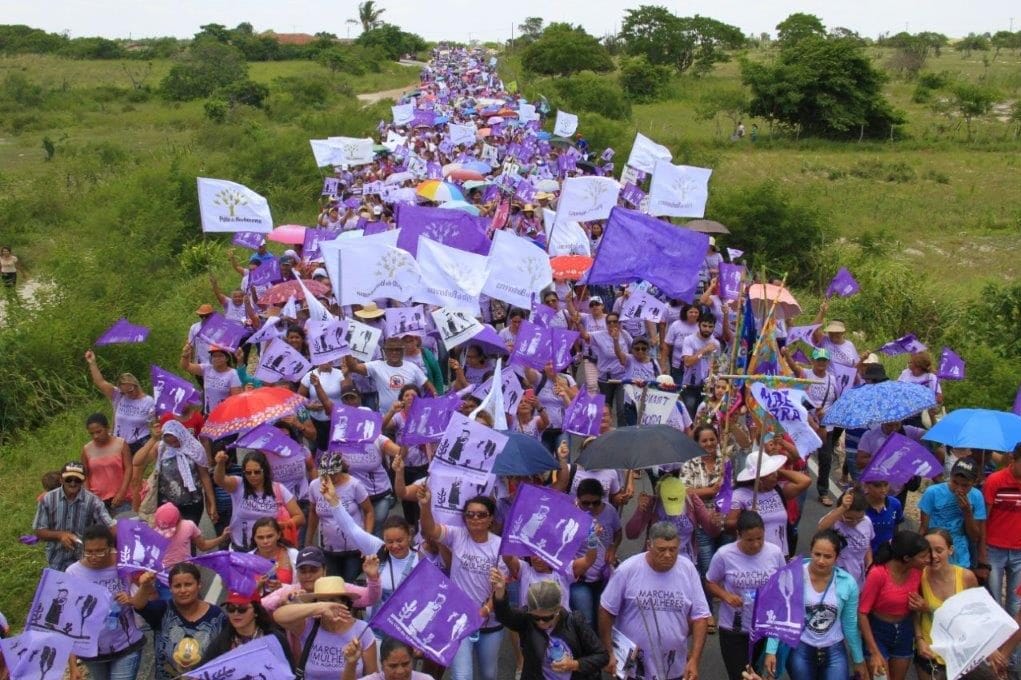
Women’s Day is an important day of mobilization for all our partner organizations. Regardless of whether these organizations work specifically on women’s rights, violence against women or agriculture. That is why our partner organizations in Brazil were also active on the streets on 8 March. In Paraiba, for example, 5000 people demonstrated for women’s rights.
Young people actively oppose machismo
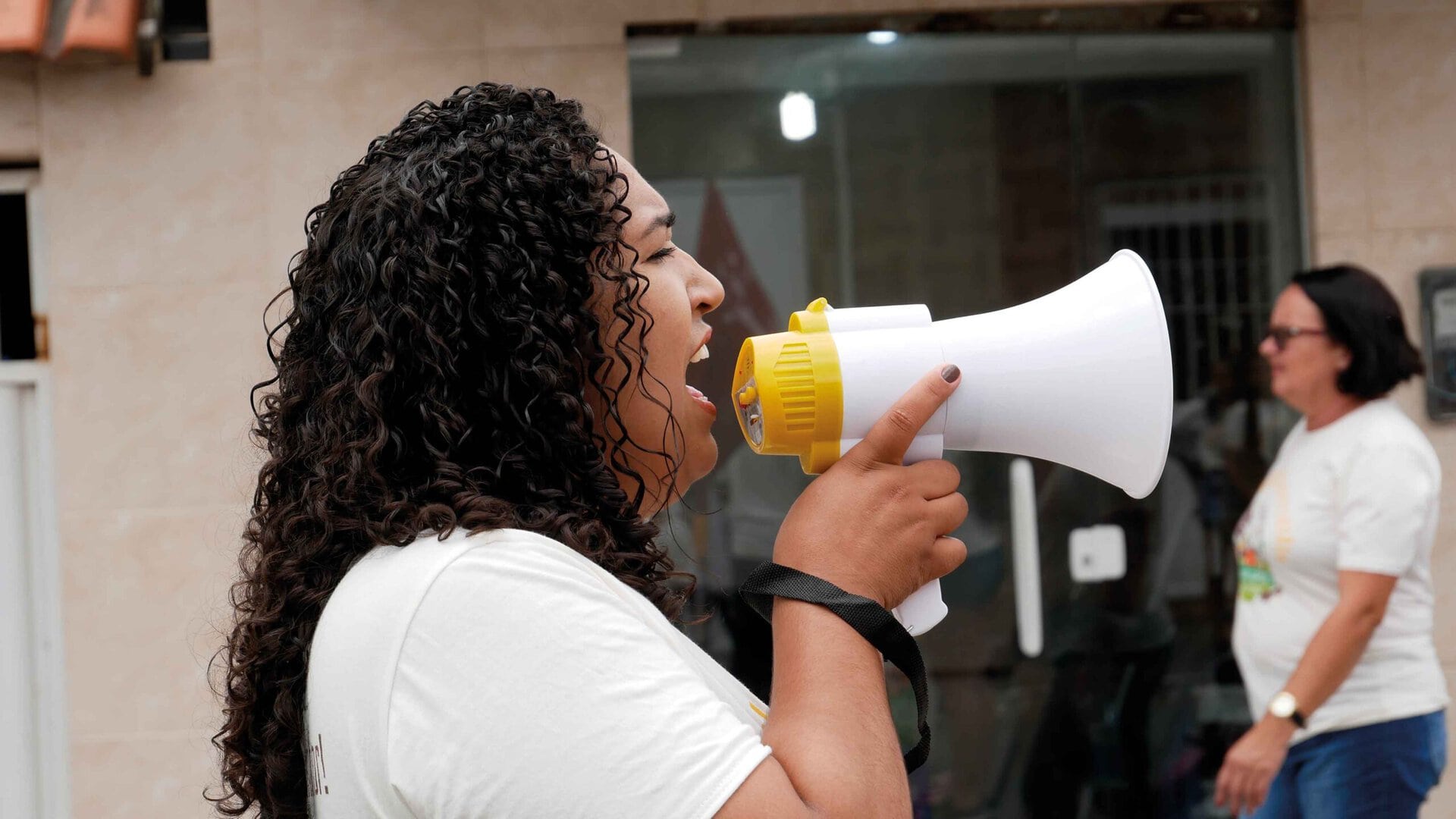
Young people who no longer want to accept the machismo that is widespread in Brazil are often very actively involved in these demonstrations. They rebel against violence against women and question traditional role models. In preparatory seminars, organized young people (supported by terre des hommes schweiz) worked on the topic, gathered information, discussed and defined their agenda and joint actions within the large demonstration. Among other things, they put on a play.
Until all the women were lying on the ground
The demonstration also included a performance in which many young women shouted out information about the disadvantaged situation of women in Brazil and then fell to the ground, symbolizing violence against women. This was repeated until all the women were lying on the ground.
Recalling the governments’ successes
The incumbent Workers’ Party (PT) has come under severe pressure due to serious allegations of corruption. Some speeches also referred to this. The corruption that pervades all political parties was condemned in the strongest possible terms. Nevertheless, the speakers considered it appropriate to recall various successes of the PT governments: the relief for the lives of ordinary women in rural areas (e.g. the “One Million Cisterns” program), the progress made in reducing poverty, the improvements in women’s rights and the improved access to education for people from poorer social classes.
Despite all the criticism of the PT government, these social movements – especially in the current crisis and the demand for the president’s impeachment – are expressing their support for the ruling PT party and its elected president.