2025 was a year of important political, social and programmatic successes for terre des hommes schweiz. Together with young people and partner organizations worldwide, we created spaces in which young people could have their say, help shape and initiate change.
COP30: When young people help shape global politics
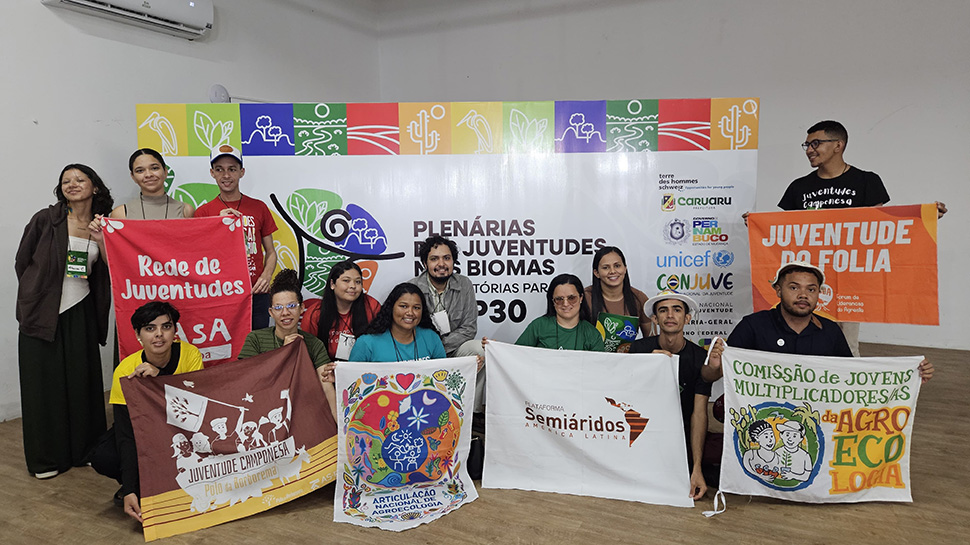
The COP30 Climate Change Conference in Belém, Brazil, in 2025 was a key milestone in our international work. Together with partner organizations from the semi-arid regions of Latin America (Semiáridos), we specifically prepared young people to contribute their perspectives to global climate policy.
411 young people from 16 countries took part in training sessions on climate justice, political processes and advocacy. 12 young delegates – including from our Latin America projects – were ultimately present at the COP30 in Belém – three of them even directly as youth negotiators in the official negotiations.
A particularly important success of this work was the presentation of a joint manifesto by the young people from the semiáridos to more than 15 political decision-makers, including government representatives such as the Swiss ambassador to Brazil and international stakeholders. The manifesto included concrete demands – from climate adaptation and agroecology to the sustainable development of disadvantaged regions.
Another milestone: by participating in and influencing the processes of the Consortium of Governors of the Brazilian Northeast, it was possible to initiate the establishment of a fund of 100 million Brazilian reals (around 15 million Swiss francs) for restoration, monitoring and sustainable development in the Brazilian Semiarido. This fund is the result of a long, joint lobbying and advocacy process involving numerous organizations. The young people and our partner organizations were an active part of this political work – also in the context of the COP30.
At the same time, we supported the People’s Summit at the UN Climate Summit, a central meeting point for civil society. Over the course of several days, more than 200 activities took place in which tens of thousands of people participated. The participation of indigenous young people and the presentation of a joint paper of demands to the COP presidency made it clear how important civil society spaces are for democratic negotiation processes.
Listen to the voices of young people on our Instagram channel
Co-determination in the healthcare system – Zimbabwe
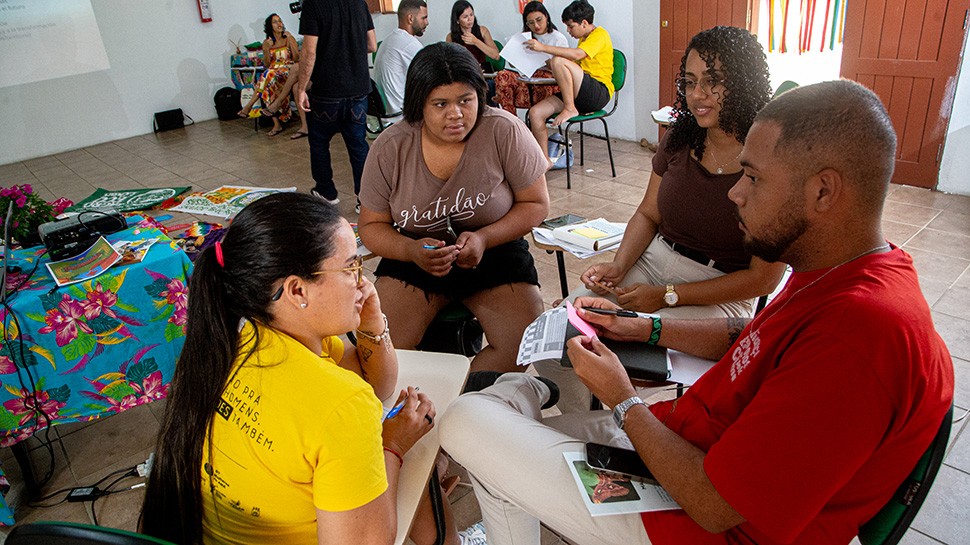
In Bulawayo, the second largest city in Zimbabwe, 22 young members of Health Center Committees were trained for the first time specifically on health systems, budget control, advocacy and quality monitoring. The aim was not only to represent young people, but also to enable them to have a real say – particularly in sexual and reproductive health, mental health and youth-friendly care.
The training responded to ongoing challenges in the province: a lack of youth-friendly structures, barriers for young people with disabilities and a continuing high number of teenage pregnancies – despite the participation of young people in the relevant bodies.
Justice for victims of violence – South Africa
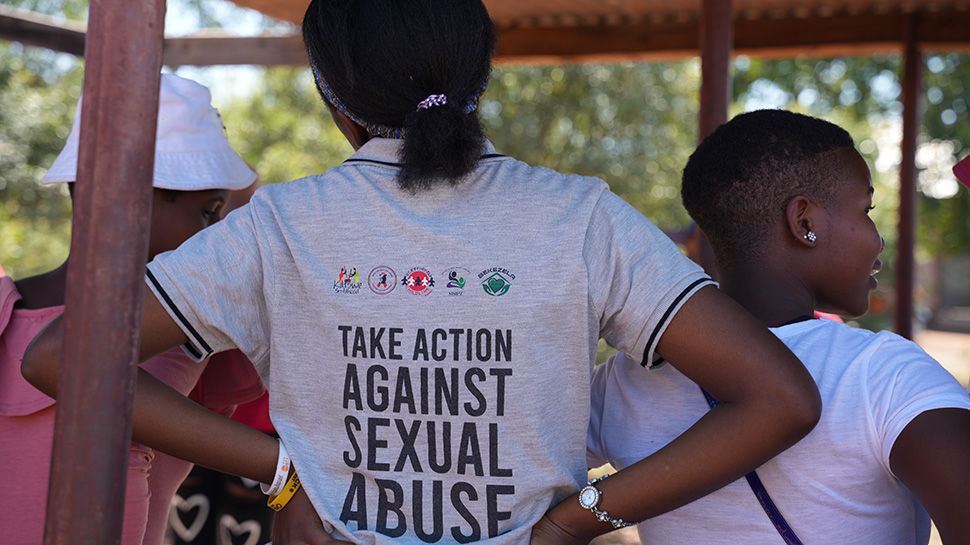
In the province of KwaZulu-Natal, our partner organizations are supporting the political work to set up a DNA laboratory in order to reduce the prevailing massive forensic backlogs in cases of sexualized violence. Delayed DNA analyses are still preventing the investigation and conviction of perpetrators.
Through targeted research, documentation that puts survivors at the center and continuous advocacy work, important political progress could be made. The planned establishment of the laboratory would be a decisive step towards greater justice.
Parliament discusses amendments to abortion law for the first time – Zimbabwe
After decades of advocacy work, Zimbabwe is about to take a decisive step: Parliament is officially discussing legislative changes to legalize abortion for the first time.
In a country with extremely restrictive abortion laws, this parliamentary debate alone is a historic milestone. It means social and media attention, broad public debate and greater visibility for the realities of girls’ and women’s lives.
Even if there are still major hurdles to overcome,
- the approval of the Senate is pending
- the practical implementation, especially in rural areas, is unclear
- Healthcare staff can continue to refuse abortions
It is clear that the fact that political majorities can be found to even discuss changes to the law marks a turning point in the history of sexual and reproductive human rights in Zimbabwe.
terre des hommes schweiz and its partner organizations remain vigilant, informed and committed. We continue to stand up for the sexual and reproductive rights of girls and women – in Zimbabwe and worldwide.
Community, participation and safe spaces in Switzerland
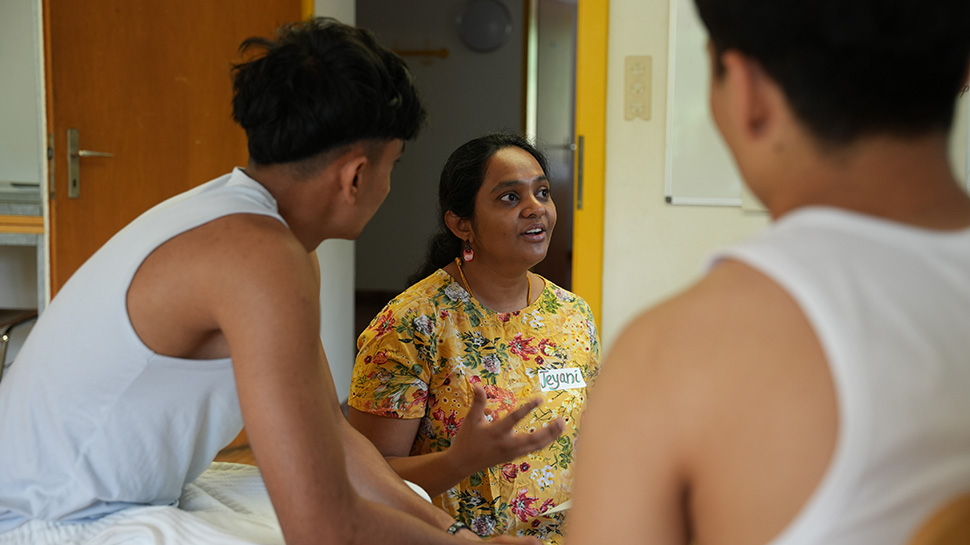
In Switzerland, 2025 was also an intensive year for terre des hommes schweiz. The MePower project supported young people with experience of flight or migration in north-western Switzerland through regular meetings, leisure activities and a summer camp.
The meetings were particularly popular and the annual summer camp at the Baselbieter Chinderhuus in Langenbruck was fully booked. For many newly arrived young people – including several underage refugees from Afghanistan and the Democratic Republic of Congo – the camp offered a welcome change, community and structure in a time often characterized by waiting.
imagine-Festival 2025 – Using synergies, opening up political spaces
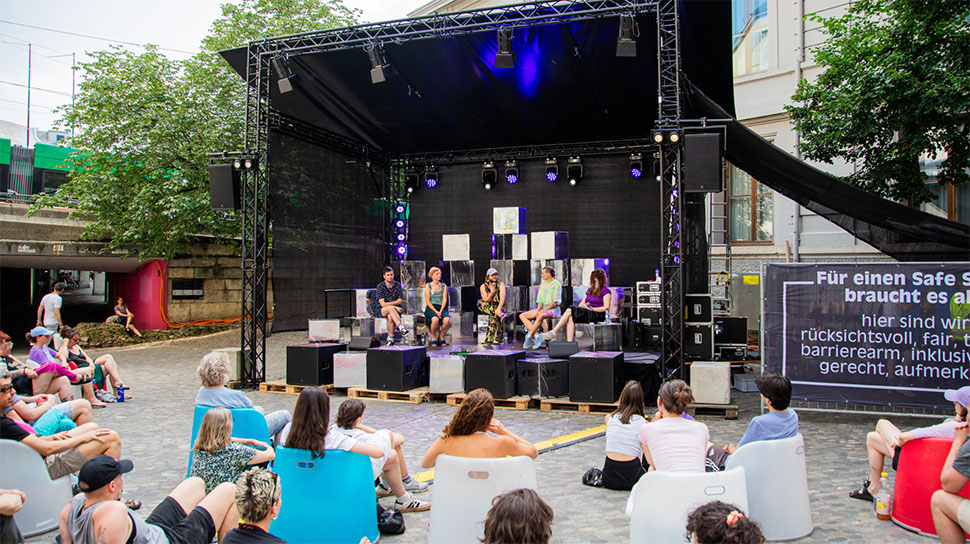
In 2025, the imagine festival once again offered young people a platform for cultural expression, social debate and political participation – supported by a diverse music and cultural program that spanned the entire weekend. On June 14, Feminist Strike Day, imagine and the Feminist Strike Basel used this platform for joint discussions on gender equality, power relations, discrimination and social change. Barfüsserplatz served as a meeting place, while imagine provided the main stage for speeches. The program continued after the demonstration procession, including a lecture by social scientist Danielle Isler on micro-aggressions and a panel discussion on changing masculinities.