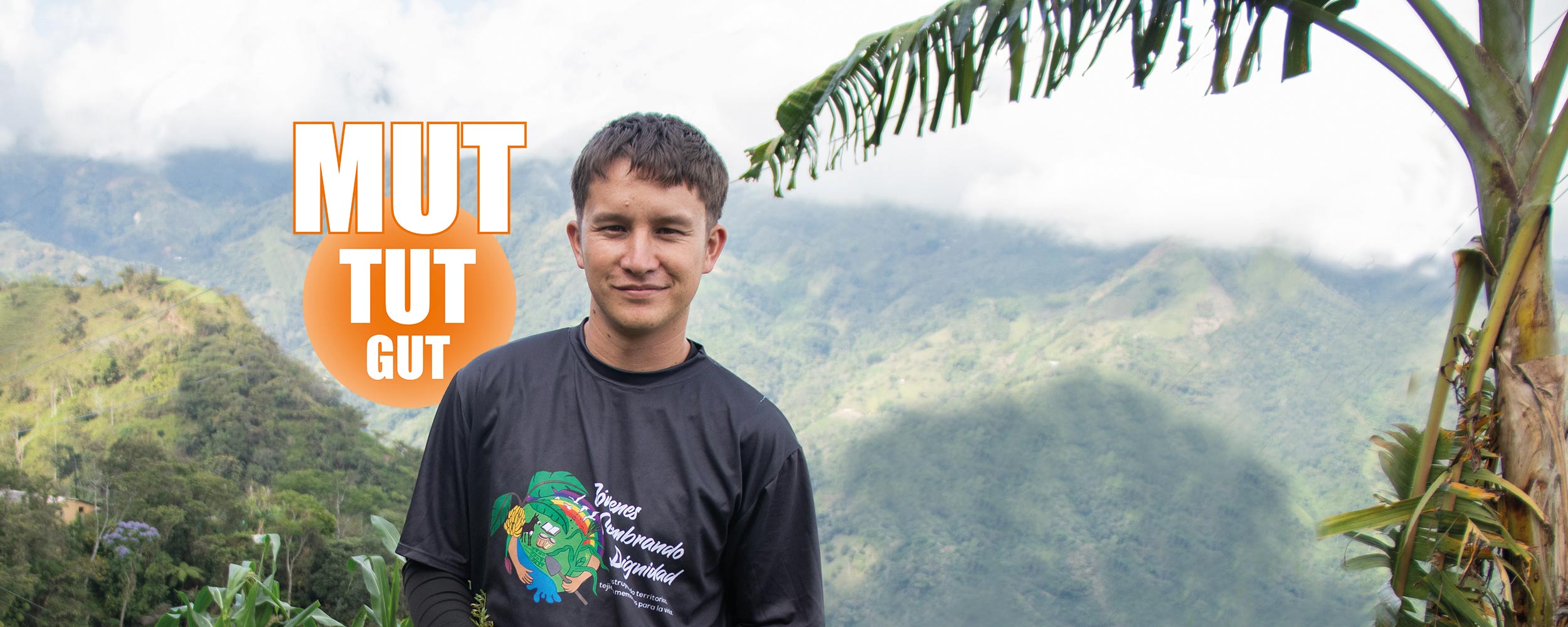

After decades of violence, young people like Luz Dey Aguirre and Manuela Galeano Ocampo are writing a new chapter: In the villages of Antioquia, Colombia, they are not only growing food but also strengthening their community. With the support of our partner organization ACA, they are channeling their experiences into action and shaping a present and future worth living.
A rooster crows in the distance. Luz Dey Aguirre is already on her way. Far from the hustle and bustle of the city, she calls the hamlet of El Diamante in rural Antioquia, Colombia, home. The 25-year-old lives with her parents, an older brother, and a nephew amid green hills: “Here I feel a sense of peace and a beautiful connection to nature,” she says. After graduating from high school in the city, she returned. “Country life gives me peace.”
This is not a given in the department of Antioquia. The decades-long armed conflict hit northwestern Colombia particularly hard. People found themselves caught between the fronts of paramilitary groups, guerrilla groups such as the Fuerzas Armadas Revolucionarias de Colombia (FARC), and drug cartels. They endured severe human rights violations and were displaced. Luz and her family were no exception. Although the situation has improved since the government’s peace agreement with the FARC ten years ago, peace remains fragile, and violence flares up time and again. Living here and building a future requires courage.
Courage That Endures
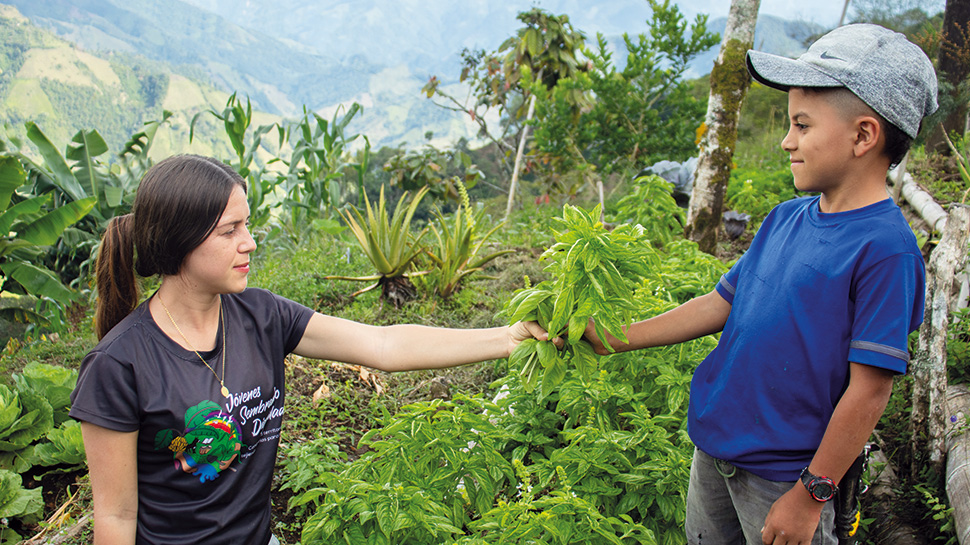
Luz is on her way to the medicinal herb garden. In addition to growing food, young people in the hamlets of the Argelia community use herbs and medicinal plants to make ointments and soaps. The products are not just for personal use; selling them brings in additional income—as do the fish from the new ponds and the eggs from their own chicken coops.
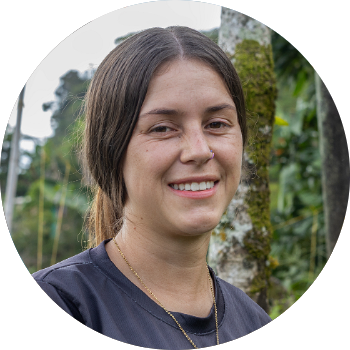
“From a young age, the organization provided me with opportunities to learn and grow. I now know more about food sovereignty, the rights of farmers like us, and environmental protection. And I can put that knowledge into practice right away.”
Luz Dey Aguirre, 25, farmer and youth advocate
Luz dreams of having her own house and farm. “It’s a wonderful feeling to grow my own food,” explains the young farmer. “It’s very important to me to know what I’m eating.” Things used to be different. “Like many children, I dreamed of leaving the village after finishing school. I believed my life would be better in the city and that I was stuck in the countryside.”
But workshops organized by our local partner organization, Asociación Campesina de Antioquia (ACA), changed her life. “I’ve been a part of ACA for many years now. It has greatly changed my life and the way I think.”
What does ACA do in Colombia?
The Antioquia Farmers’ Association is committed to rebuilding trust and solidarity within communities and to strengthening cultural identity. It offers young people new perspectives, helping them envision a future rooted in their heritage where they can pursue what they love. To this end, and to revitalize the social fabric and sense of community in the region after decades of conflict, ACA supports the communities by offering courses on topics such as organic farming methods and entrepreneurship. It also empowers young people to take on responsibility and raises awareness about nonviolent conflict resolution.
Today, the young woman is out and about in the hamlets of Argelia, passionately promoting her cause. ACA has boosted her self-confidence, encouraged her, and shown her that it is possible to live in the countryside and make her own dreams come true—together with her family. “It fills me with joy that I’m recognized as a young leader in the communities,” she says proudly. She shares her knowledge and love for her homeland with her community. She shows children, teenagers, and young adults in the neighborhood that they have a future here. The rural region should finally become a vibrant and viable place once again—with opportunities for all generations, strong community cohesion, and a strong rural identity.
Together, we grow more
In La Reina, the neighboring hamlet, Manuela Galeano Ocampo tends to her chickens. She, too, shares Luz’s story of displacement and a new beginning, as well as a love for rural life and community. The 20-year-old first learned about ACA four years ago: Before that, she says, no one came to the hamlets—“there was no such space for learning.” To access education, people had to go to the city, which was financially and logistically out of reach for most. She’s been part of ACA ever since: “I’ve learned a lot—for example, how to work successfully as part of a team, or how to improve harvests through organic farming.” Alongside her studies, she wants to improve life in her own and other communities and to encourage and motivate young people.
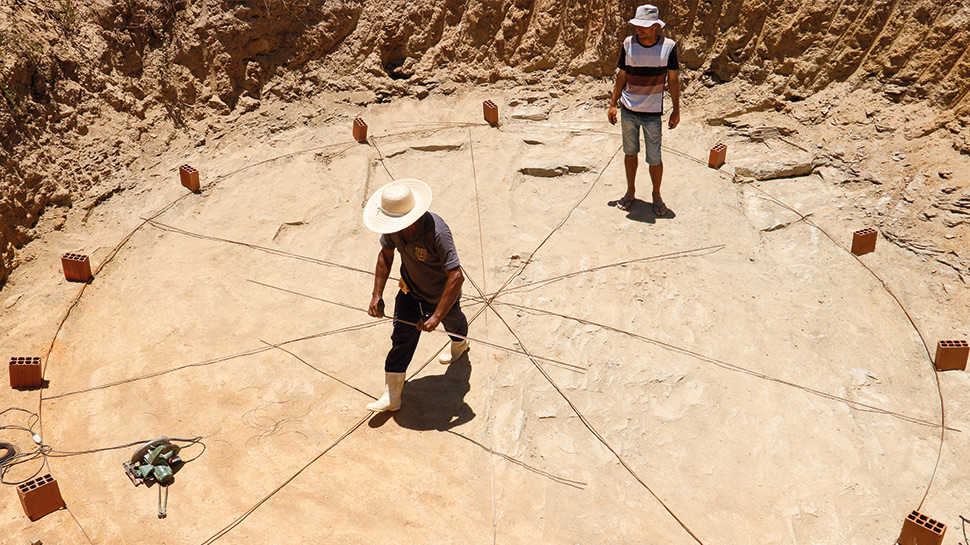
With the chickens raised for egg production, they, their families, and everyone in the hamlet participating in the ACA project have their own organic eggs at all times—and thus an important source of protein. The same goes for the fish from the ponds. When there is enough, the neighbors should benefit as well. In addition, they can generate a steady income by selling any surplus. This strengthens the entire community and makes it self-sufficient.
Daniela Mathis, Media and Communications
Donate Courage
With your support, we can create opportunities for young people in Colombia.