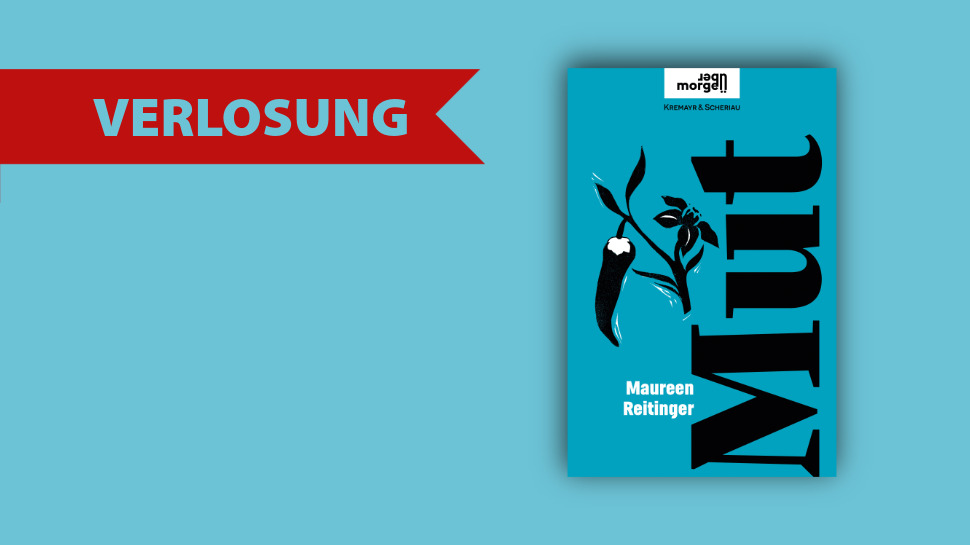
What does courage really mean? In her inspiring book, Maureen Reitinger shows why true courage often manifests itself in everyday life: quietly, invisibly, and yet powerfully.
Ms. Reitinger, when was the last time you showed courage?
Every day, in one way or another, I show courage when I open myself up to experiences that lie outside my comfort zone, without knowing what to expect. Consciously choosing to step off the beaten path. Leaping into the unknown, accompanied by fear, but also by an irrepressible zest for life. An act of self-empowerment in which I let go of the old to discover something new about myself.
What inspired you to write a book on the topic of courage?
I want us to turn the spotlight on ourselves and allow ourselves to recognize just how much courage lies within each and every one of us—especially when it isn’t immediately apparent.

“You don’t become brave overnight, but you can train yourself to make a conscious decision to adopt a brave attitude.”
Maureen Reitinger, author
How do you distinguish between everyday courage and adrenaline-fueled courage?
It takes everyday courage to cope with difficult, unpleasant, or stressful situations—often without having a choice. For example, when facing hostility because you belong to a marginalized group. To others, this may seem unremarkable and often goes unnoticed, but it is deeply rooted within us and has a lasting impact.
Adrenaline-fueled courage, on the other hand, is often associated with short-term, intense challenges. These often involve physical, risky, nerve-wracking experiences. While this may seem spectacular from the outside, it often doesn’t require much effort at all, because in such scenarios, people consciously seek out the adrenaline rush.
Do people all over the world understand “courage” in the same way, or are there differences?
Courage, as a universal concept, means overcoming fear in any situation and taking action nonetheless. Courage, as an individual concept, varies greatly from culture to culture and is strongly influenced by religion, gender roles, traditions, and the political situation in a given country.
Giveaway: Win « Courage »
Why are the most courageous stories often written by “ordinary” people?
Because they face real challenges in everyday life—without protection or a big stage—when they take on responsibility. Standing up for others and for oneself, or not giving up in difficult situations, is not rewarded with attention, but stems from inner drive and personal values. It shows just how strong we can truly be when we act out of deep conviction.
Can courage be learned?
Yes, I describe that in my book as well. It’s the small, daily steps that lead us to self-acceptance, self-confidence, and self-determination. This way, we can face life’s challenges more and more effectively and, through this daily process of “trial and error”—this consistent perseverance—practice building courage. You don’t become courageous overnight, but you can train yourself to make a conscious decision to adopt a courageous attitude.
How do you find courage in difficult times?
When we treat each other with compassion, accept help, and become aware of what we stand for and what is important to us, we find the strength to keep going, even when it’s hard.
The interview was conducted by Loredana Engler, Fundraising and Communications, terre des hommes schweiz
Donate Courage!
With your support, we create opportunities for young people in rural areas to turn their courage into concrete prospects right where they live.